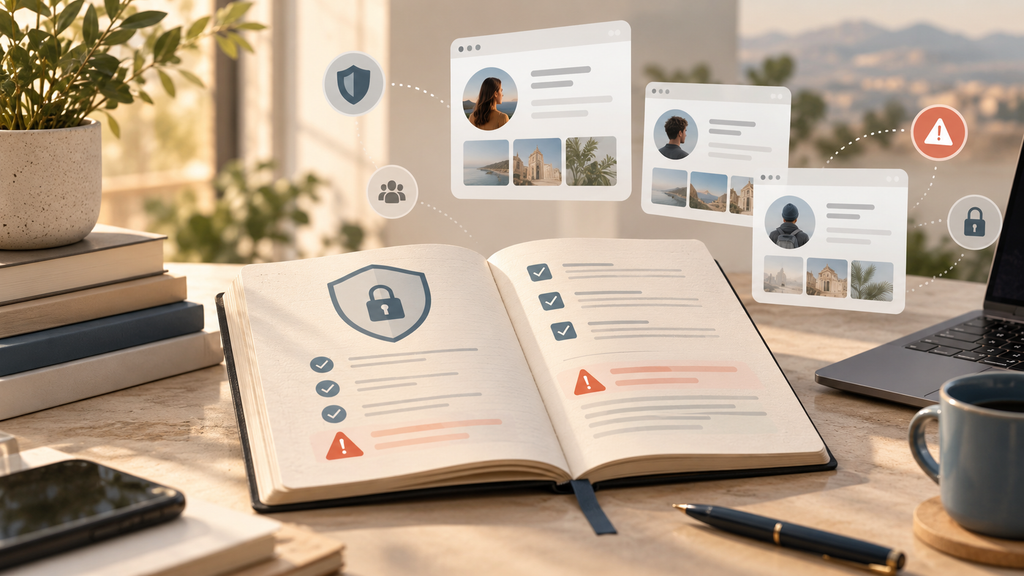
Every consumer category has its own version of buyer awareness, and browsing tools are no exception. This handbook approaches an account viewer Instagram search the way a consumer protection guide would approach any product category: what you’re actually getting, what to watch for, and what to do if a specific result doesn’t hold up to scrutiny once you’ve actually tried it.
What You’re Actually Getting
Before evaluating any specific option, it helps to know the honest scope of the entire category. An account viewer instagram tool, when built legitimately, lets you browse public Instagram content without logging into your own account. That’s the complete, honest function. Nothing about visitor lists, nothing about bypassing a locked account, nothing beyond straightforward access to information Instagram already makes public to anyone who isn’t following it.
Understanding this scope upfront is the single most useful piece of consumer literacy for this entire category. Every disappointment, every feeling of having been misled, traces back to expecting something beyond this modest, legitimate function, and recalibrating that expectation solves most of the frustration people report before they’ve even tried a second tool.
Red Flags Every Consumer Should Recognize
A few warning signs recur constantly across this category, and recognizing them takes less effort than most people assume.
A request for your Instagram password. This is the single clearest red flag in the entire category. A legitimate account viewer Instagram search should only ever require a username, nothing more. Anything asking for your actual login credentials is either misrepresenting its function or attempting something else entirely, and treating that request as disqualifying rather than a minor inconvenience is the single most protective habit a consumer can build in this space.
Promises of private account access. No tool, regardless of price or presentation, can display content from a restricted account. That boundary is enforced by Instagram itself, on its own servers, not inside whatever browser tab a specific tool happens to open. A site making this promise is either confused about how the platform works or deliberately misleading potential users, and neither possibility reflects well on the rest of what that site claims.
Hidden or missing payment terms. Free tools that suddenly require payment mid-process, without having disclosed that requirement upfront, are using a pattern consumer protection guides generally flag across every product category, not just this one. Transparency about cost, even for something nominally free, is a basic consumer expectation regardless of industry.
Aggressive upsells before basic functionality. A tool pushing a paid tier before you’ve even completed a single free search is prioritizing conversion over actually solving your problem, which is a reasonable signal to look elsewhere rather than persisting through the friction.
No visible privacy policy. A site with no clear statement about what data it collects, even for something as simple as a username search, deserves more scrutiny than one that’s upfront about its practices. This is a small detail that takes seconds to check and reveals a surprising amount about how seriously a site takes its own users.
Your Consumer Checklist
Before trusting a new site with an actual account viewer Instagram search, a short checklist takes less than a minute and meaningfully reduces risk.
Confirm the tool asks for nothing beyond a username. Check whether a privacy policy exists and is easy to find. Test the tool on a profile you already know before relying on it for anything important. Watch for how the site behaves on a second visit, whether it becomes noticeably pushier with ads or upgrade prompts once it recognizes repeat use. And read the tool’s own description of itself with healthy skepticism, since marketing language and actual functionality don’t always match in this category. None of these checks take more than a few seconds individually, but running through all of them before a first real search meaningfully lowers the odds of an unpleasant surprise later.
Understanding What You’re Actually Owed
As a consumer using a free tool, expectations should be calibrated realistically. You’re generally owed accurate information about what a tool does, reasonable transparency about data practices, and freedom from deceptive claims about capabilities. You’re not owed a specific level of polish, a completely ad-free experience, or features beyond what a free tool reasonably commits to providing when you first run an account viewer Instagram search and land on its homepage.
This distinction matters because plenty of frustration in this category comes from conflating a modest, free service with a paid product carrying stronger implied guarantees. An account viewer Instagram search that returns a functional, if unpolished, free tool has delivered on a reasonable consumer expectation, even if the experience isn’t flawless.
What to Do If You’ve Already Been Misled
If you’ve already encountered a tool making false claims, particularly one that requested login credentials or payment for something never actually delivered, a few practical steps apply.
If you provided your Instagram password anywhere you shouldn’t have, change it immediately and enable two-factor authentication if you haven’t already. This single step undoes most of the actual risk from a credential-harvesting site, even after the fact. If you provided payment information for a feature that was never delivered, most payment processors and card issuers have dispute processes for exactly this situation. And if a specific site’s claims felt deliberately deceptive rather than simply optimistic marketing, reporting it through your browser’s phishing or scam reporting tools helps flag it for others who might run the same account viewer Instagram search and land on the same misleading result.
A Broader Consumer Principle Worth Remembering
Most consumer protection guidance, regardless of product category, comes down to a handful of repeated principles: verify claims before trusting them, understand what a free product’s actual business model is, and treat requests for sensitive information as a decision point rather than a formality to click through. Applying those same habits here, in a category most people never think to apply consumer literacy to at all, closes most of the gap between a frustrating experience and a genuinely useful one.
It’s worth remembering that the tools in this category aren’t uniquely deceptive compared to other free digital products. The same patterns, hidden costs, overstated capabilities, aggressive upsells, show up across countless free apps and services in entirely unrelated categories. What makes this space feel different is mostly unfamiliarity. Once the underlying patterns are recognized here, they become easier to spot everywhere else too, which is arguably the most durable benefit of building this kind of consumer awareness in the first place.
Building Better Habits Going Forward
The consumer literacy that applies here extends well beyond this one category. Any free tool making a promise that sounds too convenient, too capable, or too good relative to what a platform’s own restrictions should reasonably allow deserves the same scrutiny outlined in this handbook, whether that’s an account viewer Instagram search or an entirely different category of free utility. The specific red flags change slightly by category, but the underlying habit, checking what’s being asked of you before what’s being offered, holds up consistently.
An account viewer Instagram tool that respects this modest, honest scope is a reasonable, low-risk option for casual browsing. One that doesn’t is worth walking away from, regardless of how convincing its landing page looks. That distinction, more than any specific feature comparison, is the actual consumer protection this handbook is built around. And like most consumer protection principles, it’s less about any single rule and more about a general posture: curious, willing to try new things, but never quite willing to take a free tool’s word for it without checking first.